How to Design a Kitchen That Encourages Cooking at Home
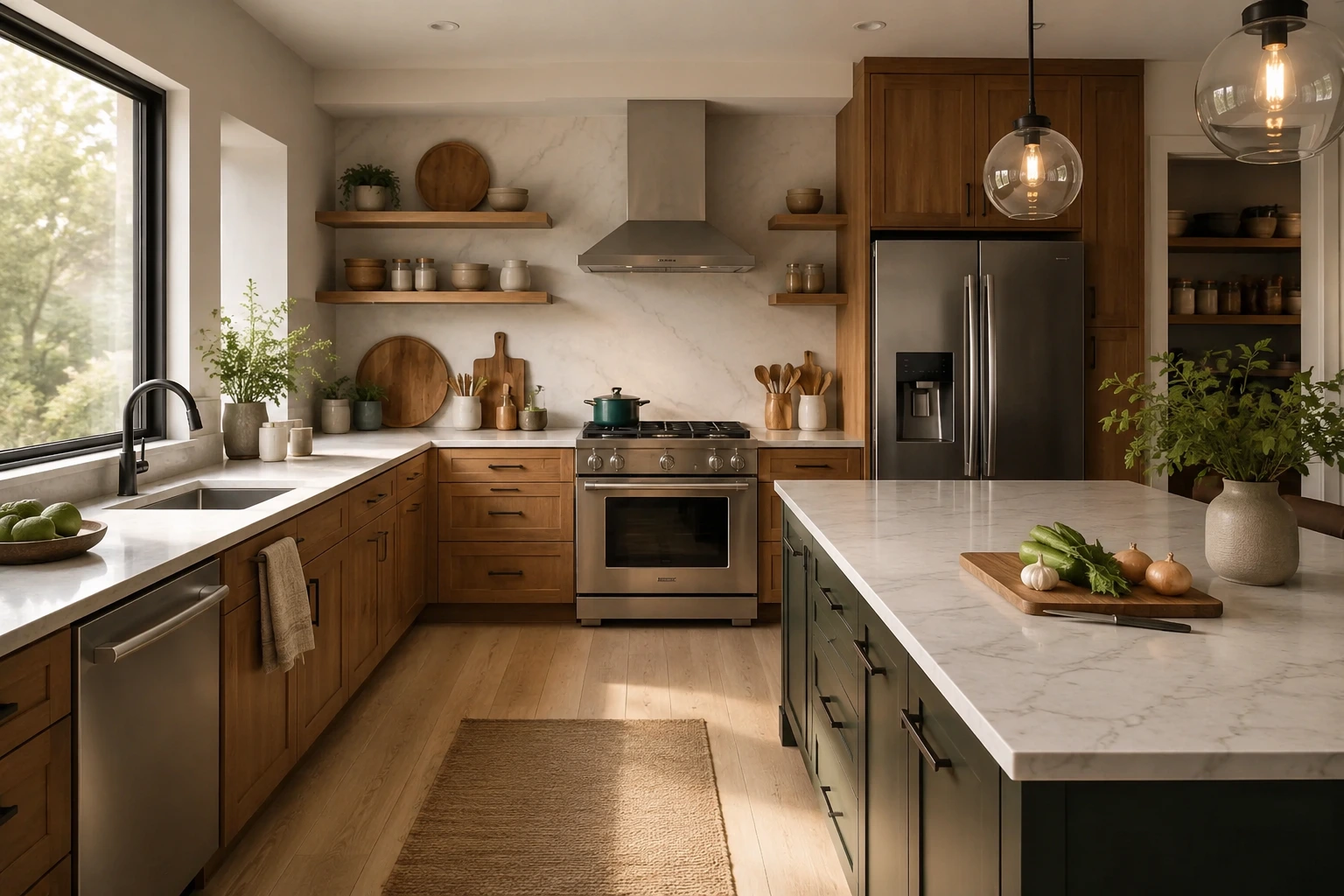
Designing a space that encourages cooking starts with a layout that fits the way you live. That means placing your appliances, counter space, and storage where they make sense for your daily routine. When you follow this approach, the kitchen becomes a place you genuinely enjoy.
In fact, of all the rooms in your home, the kitchen is the one that never really gets a day off. That’s why a well-planned layout removes the daily frustrations that push people toward takeout meals.
In this article, we cover practical layout options, storage ideas, and design details that make your kitchen work for you. A well-planned layout saves you energy, and over time, money too.
The layout is where it all begins.
Kitchen Layouts That Make Daily Cooking Easier
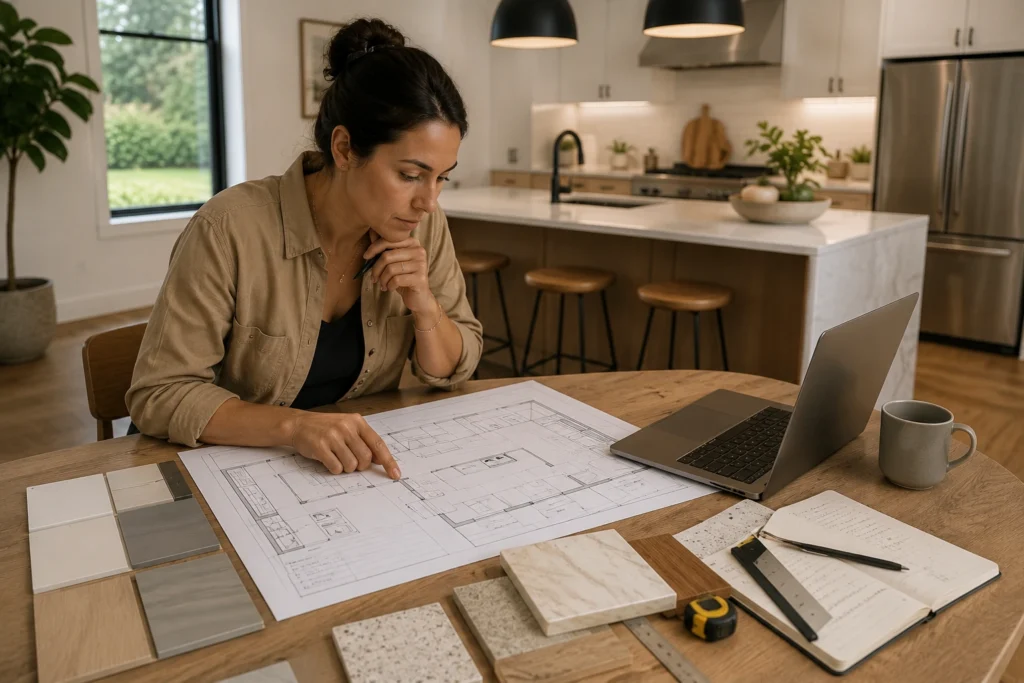
A poorly planned kitchen slows you down, disrupts your cooking flow, and makes the whole experience frustrating. A layout that works for your daily routine, on the other hand, is one of the most fruitful investments you can make.
Two things are worth getting right before anything else.
Galley vs. Island Kitchen
The galley kitchen is one of the most efficient kitchen layouts for compact spaces. It runs along two parallel walls, with a central walkway keeping everything within arm’s reach.
For larger homes with a large space to work with, an island kitchen layout opens up prep space on all sides. However, a narrow La Jolla kitchen we redesigned proved that a galley layout often delivers more usable counter space than an island would.
In between those two options, the L-shaped kitchen and U-shaped kitchen layouts offer a solid middle ground for most homes.
How Counter Space Affects Your Cooking Comfort
Counter space is one of those things you never think about until you run out of it halfway through preparing a meal. And when that happens, cooking stops feeling enjoyable pretty fast.
To put it another way, a kitchen with too little counter space is like trying to wrap gifts on a coffee table. You shuffle things around, balance ingredients on the edge, and somehow get it done, but it costs you time and energy every single time.
The L-shaped and peninsula kitchen layouts both fix this well. Each one adds a second run of counter along an adjacent wall, so you can prep, plate, and move without constantly shifting things around.
So, do you need both a kitchen island and a dining table, or can one do the job of both?
Island or Dining Table: Do You Need Both?
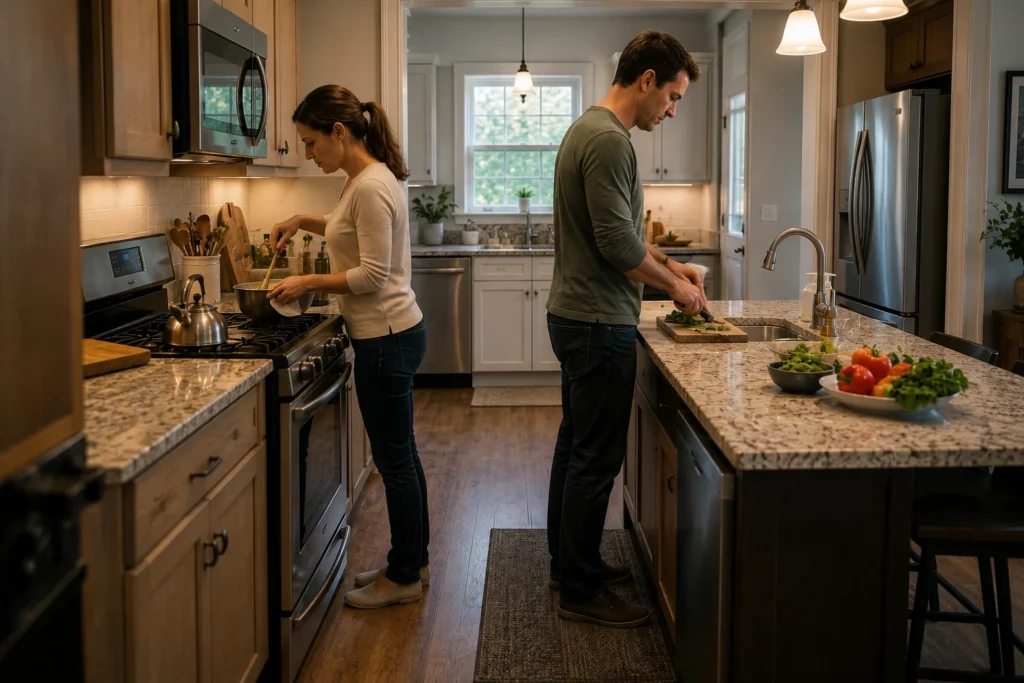
The short answer is no, not always. In most cases, the amount of available floor space is what decides it. A lot of homeowners try to squeeze both in and end up bumping into themselves every time they move (trust us, the math never works out).
In an open plan kitchen with generous floor space, a central island, and a dining table, you can work side by side. The island bench handles prep and cooking, while the dining table provides the dining area with a clear, dedicated spot for meals.
That said, both pieces need enough room to function independently. Crowd them together, and the whole room feels smaller than it is.
Small kitchen spaces tell a different story. One well-chosen piece does both jobs better. For example, bar stools along the island bench or a peninsula kitchen layout handle casual dining without crowding the entire space.
In studio apartments, especially, bar stools along a single wall keep the dining space compact and the room feeling open.
The Basics That Make a Kitchen Run Smoothly
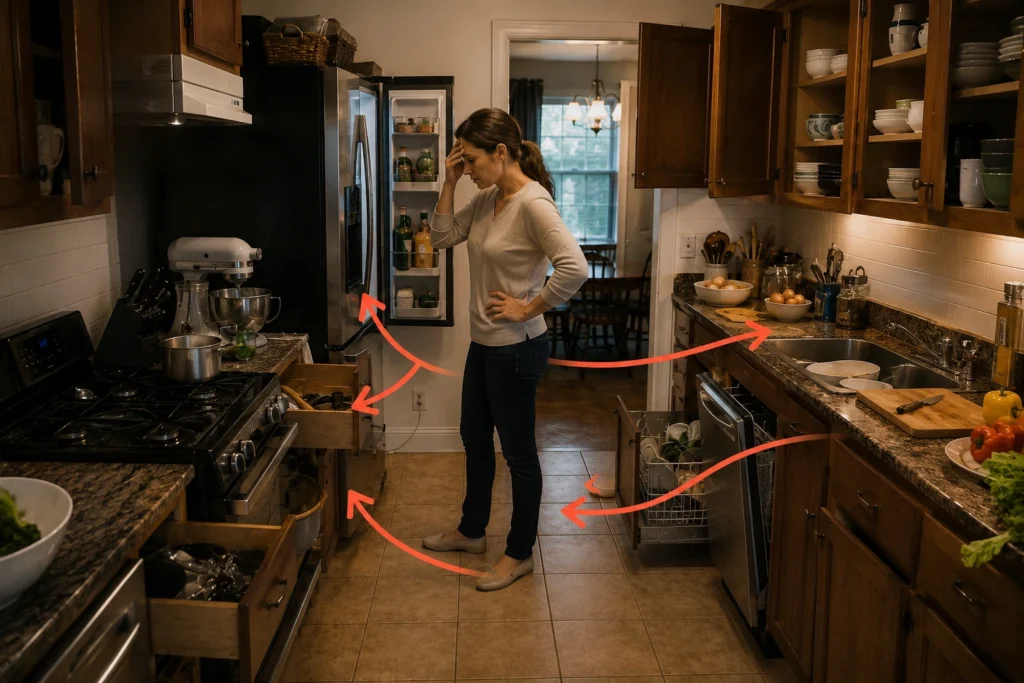
Poor appliance placement, badly positioned cabinets, and unclear work zones drive most of the frustration people feel in their kitchens.
Take a Point Loma client we worked with, who told us cooking dinner felt like running laps. After looking at the layout, everything made sense. The stove, sink, and fridge were spread across three separate walls.
Most of the friction in a kitchen traces back to these four things.
- Appliance Grouping: Put your stove, sink, and fridge in a triangle, and you will notice less running around during meal prep right away. That one shift keeps your efficient workflow tight and your cooking time shorter.
- Work Zones: A kitchen with clear prep, cooking, and cleaning zones just runs better. When each task has its own spot, nothing gets in the way of anything else, and cooking starts to feel a lot more relaxed.
- Cabinet Placement: The closer your kitchen cabinets are to where you cook, the less time you spend searching for things. Deep drawers near the stove and pull-out units by the prep area work well together, and smooth cupboard doors tie the whole setup together.
- Wall Storage: Most kitchens ignore the back wall entirely, and that is a missed opportunity. Tall cabinets up there free up floor space and keep the cooking area clear, especially in an open-plan kitchen where every bit of storage counts.
Good storage and a solid workflow set the foundation. From there, the design details are what make a kitchen worth spending time in.
The Design Details That Make Cooking Enjoyable
Lighting, natural light, and ventilation have a direct impact on how enjoyable your kitchen is to cook in (kitchens with more daylight get used more). In practice, the right lighting puts light exactly where you need it during food prep, and good ventilation keeps the temperature and air quality comfortable throughout
These three details deserve attention before you finalise anything else.
| Feature | What It Does | Best For |
| Pendant lights | Put focused light right above the island bench or dining table, so food prep becomes a lot easier to see | Modern kitchens and open plan spaces where the main overhead light leaves shadows on the work surface |
| French doors | Bring daylight straight into the kitchen and cut down on artificial lighting during the day | Kitchens that open out to a garden or outdoor dining area |
| Focal point | A bold splashback or a different cabinet colour pulls the eye to one spot and gives the kitchen a clean, intentional look | Any kitchen that wants a tidy, put-together style without adding more stuff |
Beyond that, proper ventilation, ambient lighting, and hard-wearing floors are three details most homeowners often overlook.
Ventilation is a good example of this. Without it, heat and cooking odours linger and make the kitchen uncomfortable to cook in. A hard-wearing floor, on the other hand, handles the daily wear of a busy kitchen without showing it.
Professional chefs, for their part, design their home kitchens with these details front and centre.
The Right Kitchen Design Makes Cooking at Home a Whole Lot Easier
A well-planned kitchen removes the friction that stops people from cooking at home. Once that clears up, cooking becomes something you find yourself doing more often, and enjoying it too.
We walked through layouts, storage, workflow, and the design details that pull a kitchen together. Each of those areas plays a direct role in how comfortable and enjoyable your kitchen feels to use.
Sweet Lydia’s Kitchen is here to help you get there. Our team will take you through every design decision you need to make.
At the end of the day, your kitchen should work as hard as you do.