Why Ergonomic Kitchen Design Improves Daily Use
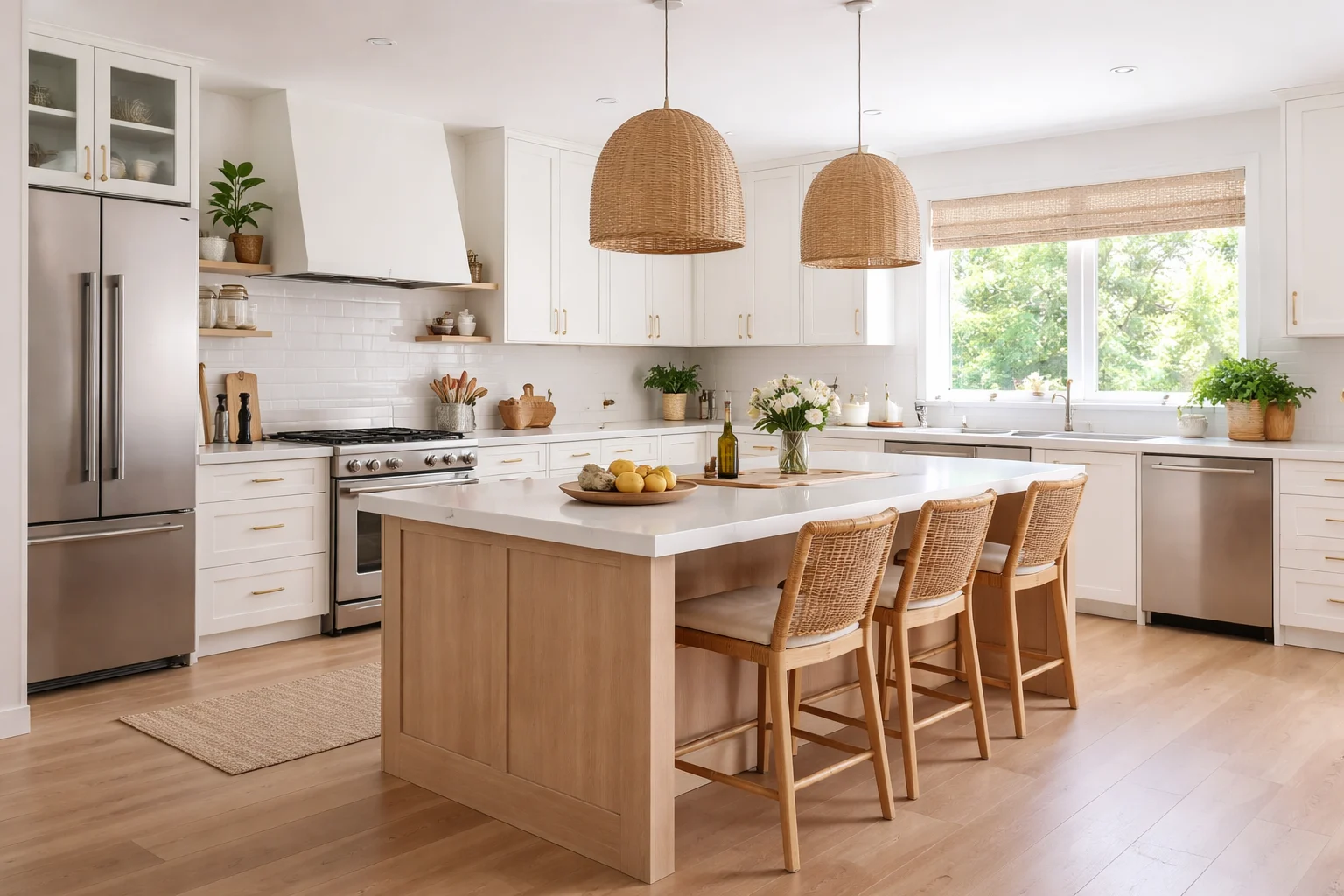
Ergonomic kitchen design improves daily use because it reduces strain on your body and cuts down wasted movement. When your sink, stove, and storage sit at the right working height and distance, cooking feels easier and faster.
The problem is that most kitchen layouts focus on looks first. And when comfort takes a back seat, you end up with sore backs, tired legs, and too many steps between appliances. We’ve helped clients across San Diego rethink their cabinet placement and workflow, and the difference usually shows up in how they feel after a long day of cooking.
In this guide, you’ll learn what kitchen ergonomics actually means, which layouts support natural movement, and practical tips for creating a space that works with your body.
What Is Ergonomic Kitchen Design?
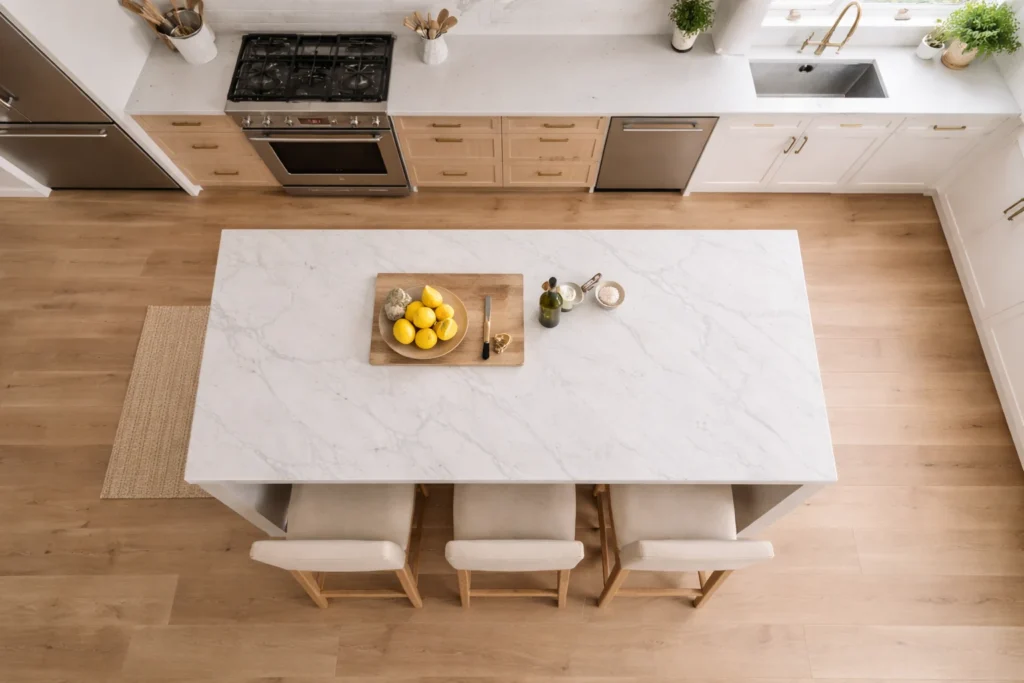
Ergonomic kitchen design is a planning approach that prioritizes comfort, posture, and efficient movement over aesthetics alone. It arranges your kitchen layout around how your body naturally works, so you spend less time stretching and bending during cooking.
To understand why this approach works, let’s break down what sets it apart from standard planning.
How It Differs From Standard Kitchen Planning
Frankly, most standard layouts follow cookie-cutter cabinet dimensions without considering who actually uses the space. Builders often install wall cabinets and base cabinets at fixed heights, regardless of whether those measurements fit your body.
Ergonomic kitchen design takes a different approach by factoring in your reach, your posture, and the tasks you do most often.
What It Factors In
Your height, cooking habits, and how often you use each zone all play a role here. We’ve worked with clients who didn’t realize their wall cabinets sat too high until we pointed it out. The goal is to reduce unnecessary bending during food preparation so everyday tasks feel lighter.
How Kitchen Layout Options Affect Daily Movement
Now, let’s look at how different kitchen layout options affect your daily movement. The right layout cuts down on wasted steps and keeps everything within easy reach. Here’s how the most common options compare.
| Layout Type | Best For | Watch Out For |
| L-Shaped | Small to mid-sized kitchens, open floor plans | Corner cabinet dead zones |
| Galley | Solo cooks, narrow rooms | Cramped with two people |
| U-Shaped | Larger kitchens, serious home cooks | Bottlenecks can occur if poorly planned |
Each kitchen layout follows the work triangle principle, which connects your sink, stove, and refrigerator in a loop.
The NKBA’s kitchen planning guidelines recommend keeping the total distance under 26 feet, with no single leg shorter than 4 feet or longer than 9 feet. An L-shaped kitchen layout handles this well in tighter spaces, and we’ve seen it work beautifully in smaller San Diego bungalows around North Park.
Also, U-shaped kitchen layouts offer more counter space for food preparation and storage. But plan your cabinet placement carefully to keep workflow efficient and avoid corners where dishes and pots pile up.
Kitchen Cabinets and Correct Working Height
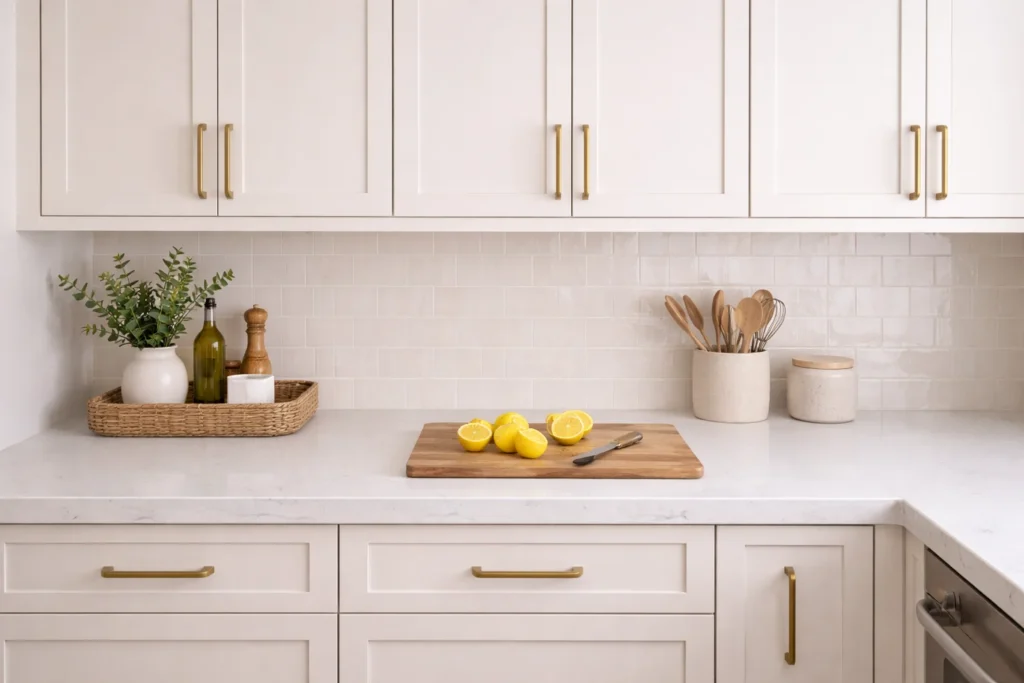
Most standard cabinet heights were designed decades ago for an “average” person who may not even exist. So if your kitchen cabinets feel awkward to use, the working height is probably off. Let’s look at how to get it right.
Base Cabinets and Elbow Height
Base cabinets should align with your elbow height for comfortable chopping and food preparation. For most people, that sweet spot falls somewhere between 34 and 36 inches.
If you’re taller or shorter than average, even a two-inch adjustment makes a noticeable difference in how your body feels after preparing dinner.
Upper Cabinets and Reaching Height
Once that’s established, the focus shifts to your wall cabinets.
Upper cabinets placed too high force awkward reaching that strains your shoulders over time (that’s a risk your body can’t afford long-term). Repetitive movements like this are a leading cause of musculoskeletal issues according to the Bureau of Labor Statistics.
We’ve worked with plenty of clients over 5’4″ who struggled with standard 18-inch clearances until we adjusted the reaching height. So before you commit to standard dimensions, measure your own shoulder height and plan accordingly.
Why a Kitchen Island Boosts Kitchen Productivity
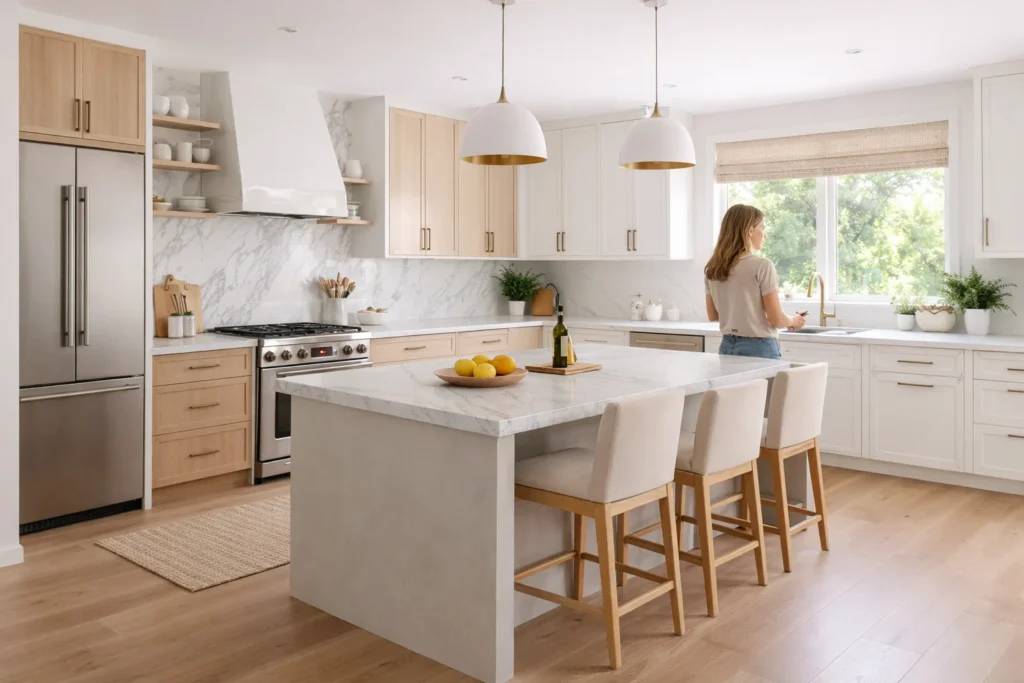
From there, let’s shift the focus to one of the most versatile additions you can make: the kitchen island. A well-placed island gives you extra workspace right where you need it most, and that boost in kitchen productivity shows up every time you cook.
A kitchen island creates a central hub for food preparation, serving, and casual dining. It gives you a spot to set down groceries or spread out ingredients without cluttering your main counters.
And believe it or not, one NKBA study found that a poorly planned kitchen layout adds up to 200 extra steps per meal. An island in the right spot cuts that number down real quick (we’ve seen clients shave off five minutes per meal just from this change).
To get the most out of your island, pair it with a functional kitchen layout that keeps traffic flowing. You’ll want at least 42 inches of clearance on all sides. Plus, adding pull-out drawers underneath keeps pots, pans, and dishes within easy reach, so you’re not walking to distant cabinets during busy cooking sessions.
Simple Home Design Changes for Better Kitchen Ergonomics
Now that you know what to look for, here are a few easy home design upgrades that improve kitchen ergonomics without a full renovation.
- Soft-close Cabinet Doors: You won’t deal with slamming or loud noise during busy cooking sessions, and your fingers stay safe from getting caught.
- Pull Out Drawers in Base Cabinets: Deep bending to reach pots and pans at ground level becomes a thing of the past. This one’s become a favorite for our La Jolla clients who want function without tearing the kitchen apart.
- Under-cabinet Lighting: Good task lighting reduces eye strain and makes food preparation safer near the stove.
- Drawer Organizers: Utensils and small items stay within easy reach, so you’re not digging around during meal prep.
- Anti-fatigue Mats: Standing on hard floors while cooking takes a toll over time (and yes, your knees will thank you later).
Hardware that doesn’t require tight grasping or twisting helps daily comfort, too. The U.S. Access Board recommends controls that work with minimal effort, and that principle applies just as well in your kitchen.
Ergonomic Kitchen Design Is Worth the Effort
A well-planned ergonomic kitchen saves your body from years of unnecessary strain, and you don’t need a full renovation to get there. Even small upgrades like drawer organizers or adjusted cabinet heights make a difference over time.
Good ergonomics means fewer sore muscles after cooking dinner and more energy left for the people you’re feeding. If you’re ready to rethink your kitchen layout, visit Sweet Lydia’s Kitchen to get started.